
Share this post
Managing thousands of IoT devices across factories, plants, and remote sites requires a platform that scales, stays secure, and is easy to use. You need a solution that centralizes control, simplifies edge deployments, and gives clear visibility into your device fleet.
This guide reviews the best IoT device management platforms for several use cases and for solving real-world industrial IoT challenges.
Portainer: Best for Managing Software Workloads on IoT and Edge Devices
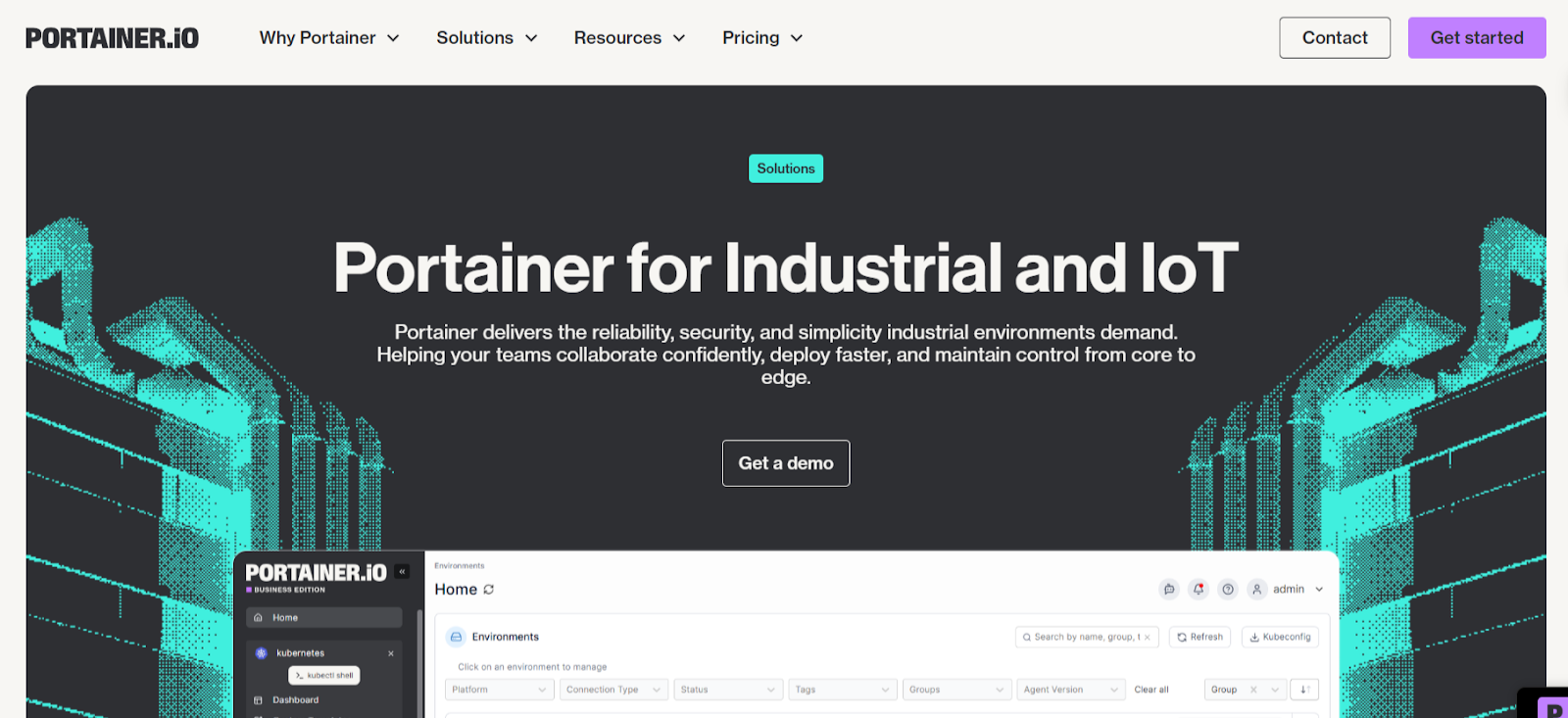
Portainer is an enterprise platform for managing containerized software workloads across IoT and industrial edge environments.
It provides a centralized control plane for deploying, updating, and operating applications on gateways, industrial PCs, and edge Kubernetes clusters. Instead of focusing on sensor provisioning or firmware updates, Portainer manages the application layer that processes data and integrates with industrial systems.
Key Features
Portainer gives you centralized control over containerized applications running on gateways, industrial PCs, and edge clusters. Let's see a few features that make this possible.
Centralized Edge Environment Management
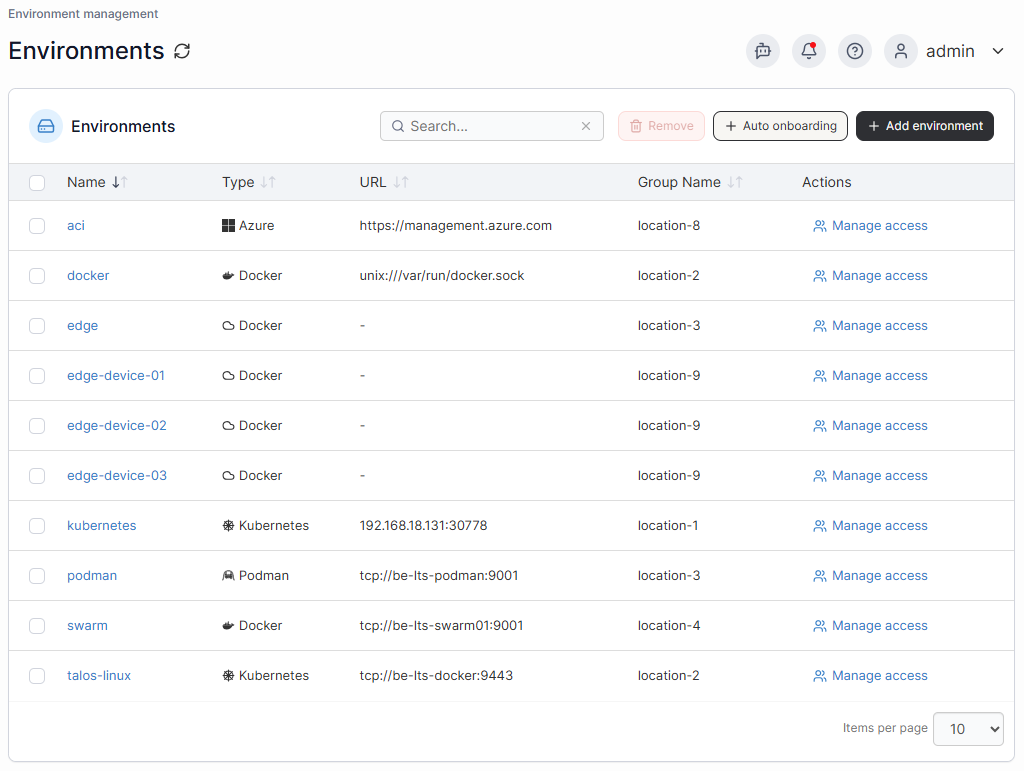
Portainer allows you manage hundreds or thousands of edge environments from a single UI. Each environment represents an IoT gateway, industrial PC, or edge cluster. By utilizing a centralized IoT device management dashboard, you can deploy, update, and monitor containerized workloads across your entire fleet from one place, even when connectivity is unreliable. Implementing scalable fleet device management protocols helps bridge the gap between cloud control and edge realities.
GitOps-Based Application Delivery
Portainer includes built-in GitOps, allowing workloads to be defined once and consistently applied everywhere. Changes are pulled from Git and reconciled automatically on edge devices. This reduces manual work and supports repeatable deployments, which is crucial for large-scale IoT remote management solutions.
Secure, Air-Gapped Operations
Portainer runs fully self-hosted and supports air-gapped deployments.
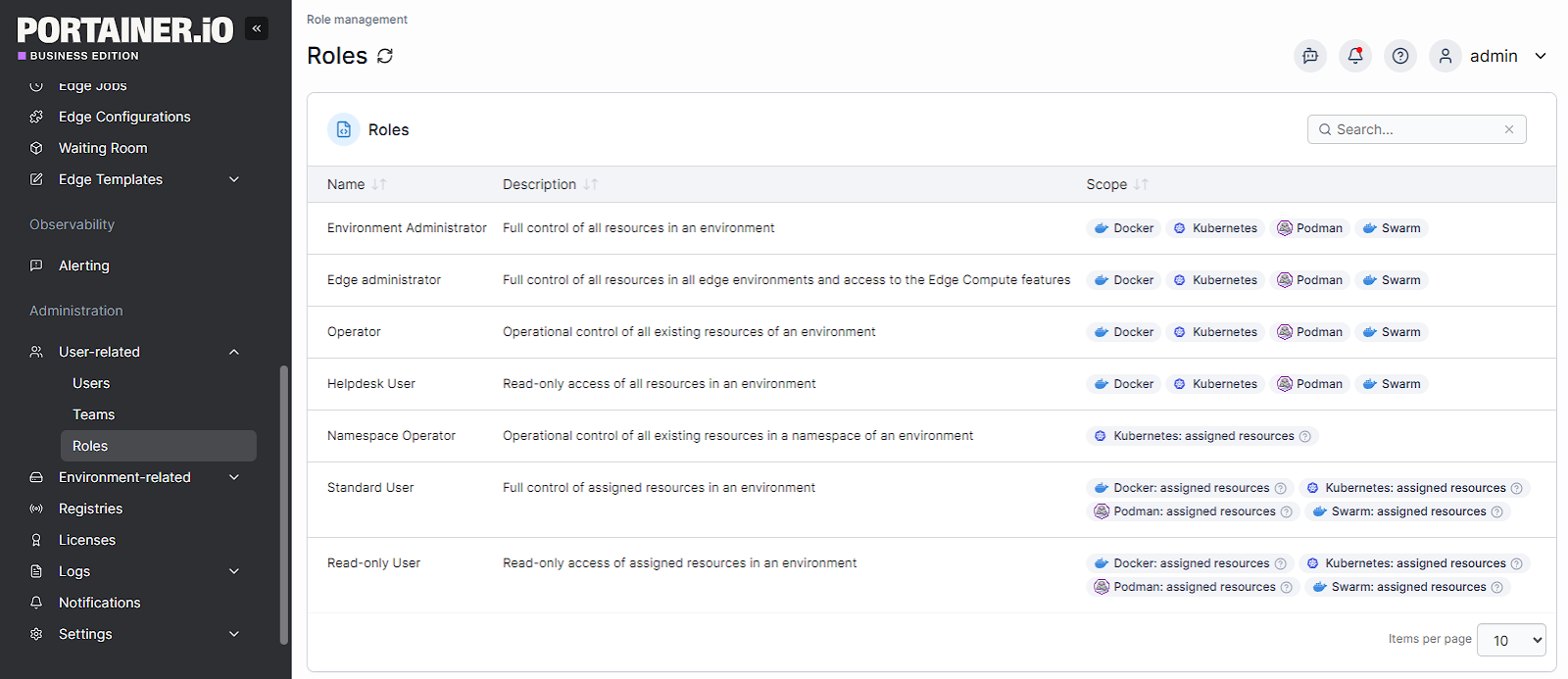
It features role-based access control, environment isolation, and auditability, which help meet industrial security requirements. No doubt it's a strong choice for enterprises that need a remote IoT device management platform for software workloads in regulated or offline environments.
{{article-cta}}
Pricing
Note: You can get an extended enterprise free trial with 15 nodes to test the platform on a larger environment for 45 days.
Where Portainer Shines
- Managing software at the industrial edge: Portainer gives you a clear way to deploy and operate containerized workloads on IoT gateways, industrial PCs, and edge clusters. It works well when applications must run close to machines and data sources.
- Operating at scale with limited connectivity: Edge agents handle unreliable networks and offline sites, making Portainer a practical IoT remote management solution for factories, utilities, and remote locations.
- Security and governance for enterprise teams: Role-based access, environment isolation, and audit controls support large teams and regulated Industrial IoT environments.
Where Portainer Falls Short
- No native device or firmware management: Portainer does not handle sensor provisioning, hardware health, or OTA firmware updates, which disqualifies teams looking for traditional IoT device management tools.
- Requires containerized workloads: Environments that rely on legacy software without containers or Kubernetes may need additional modernization before Portainer adds value.
Customer Reviews
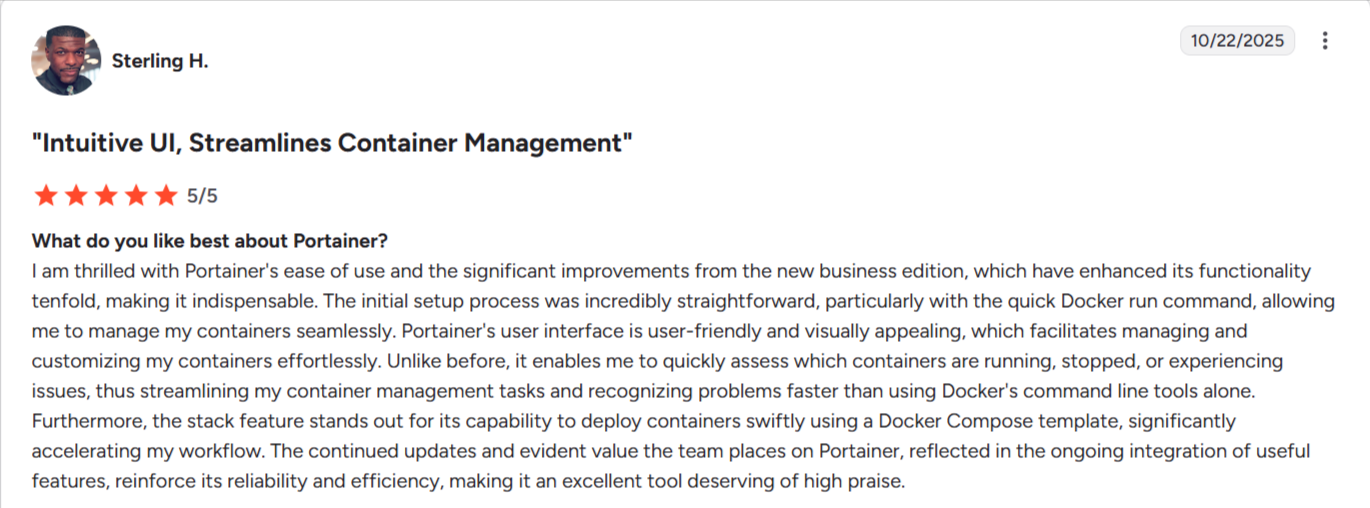
Source: G2
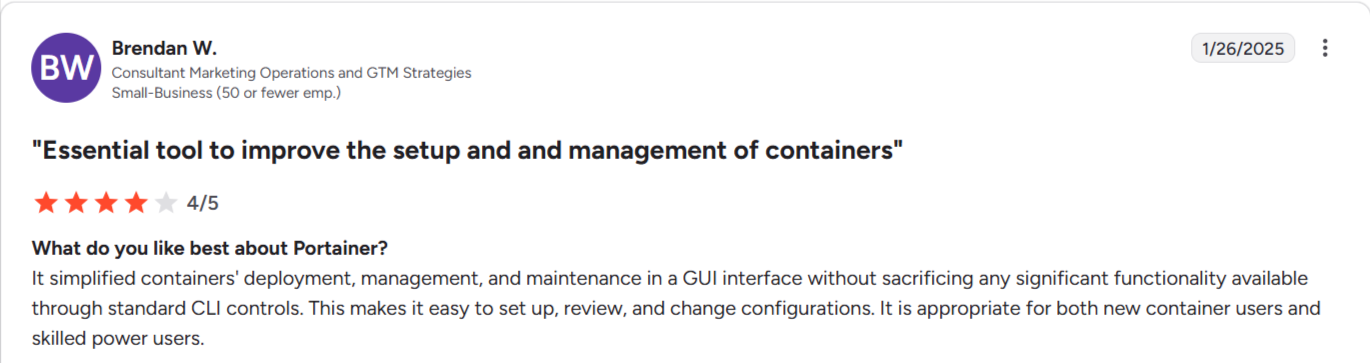
Source: G2
Who Portainer is best for
- Industrial IT and platform teams: Managing containerized applications across IoT gateways, edge servers, and Kubernetes clusters in distributed industrial environments.
- Enterprises running Industrial IoT at scale: Needing secure, self-hosted IoT remote management for software workloads across many edge locations.
Book a demo to see how Portainer helps enterprise teams collaborate confidently, deploy faster, and maintain control from core to edge.
Azure IoT Hub: Best for Secure, Cloud-Based Industrial IoT Device Control
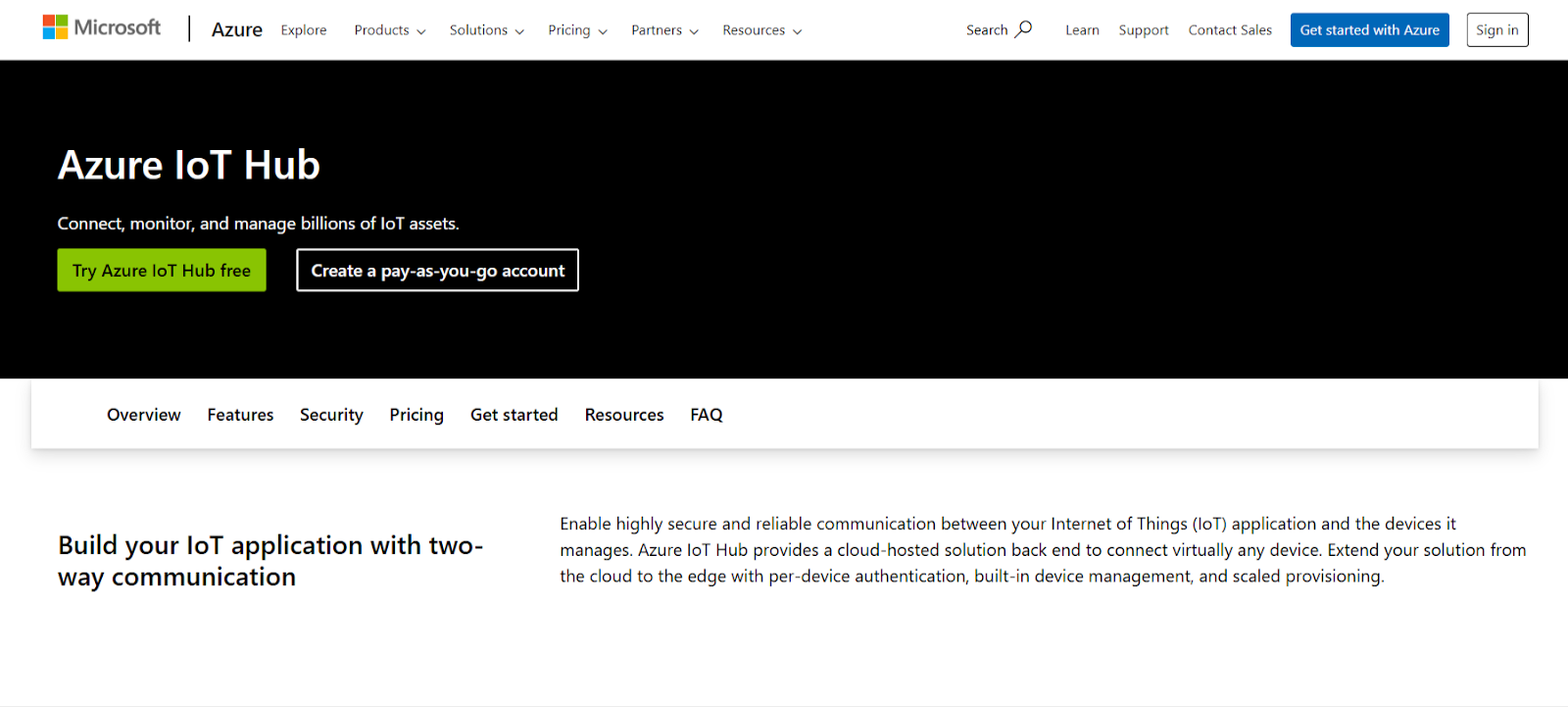
Azure IoT Hub is a managed industrial IoT device management platform that securely connects, monitors, and controls devices at scale. It focuses on bi-directional communication, device authentication, and lifecycle management within the Microsoft Azure ecosystem.
The platform works well if operations already rely on Azure and need centralized control over industrial devices, gateways, and edge systems through cloud-native services.
Key Features
- Secure device connectivity: Uses per-device authentication and encrypted communication to manage trusted connections at scale.
- Device twins and state management: Maintains digital representations of devices to track configuration, status, and metadata.
- Bi-directional messaging: Supports cloud-to-device and device-to-cloud communication for commands and telemetry.
- Integration with Azure services: Connects seamlessly with Azure Stream Analytics, Azure Monitor, and Azure IoT Edge.
Pricing
Azure IoT Hub pricing is tier-based and depends on message volume and feature requirements.
Where Azure IoT Hub Shines
- Strong security model: Built-in identity management and access controls support enterprise and regulated environments.
- Azure-native integration: Works smoothly with existing Microsoft cloud services and enterprise workflows.
- Scalable device communication: Azure IoT Hub handles large volumes of device messages reliably across distributed deployments.
Where Azure IoT Hub Falls Short
- Steep setup curve: Initial configuration requires familiarity with Azure services, policies, and architecture.
- Limited edge autonomy: Many capabilities depend on cloud connectivity, reducing flexibility for offline or remote sites.
- Potential latency in certain scenarios: Some use cases report occasional message delivery delays, which can affect time-sensitive industrial workflows and real-time device control.

Source: Reddit
- Vendor lock-in risk: Core device management and messaging capabilities are tightly bound to Azure services, limiting flexibility for multi-cloud or on-prem industrial strategies.
Customer Reviews
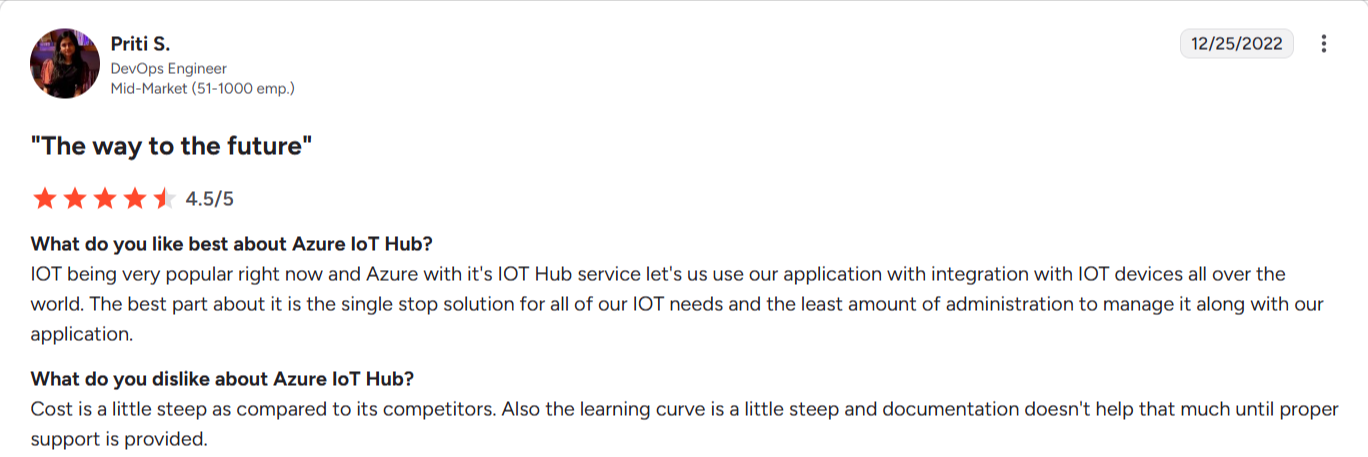
Source: G2
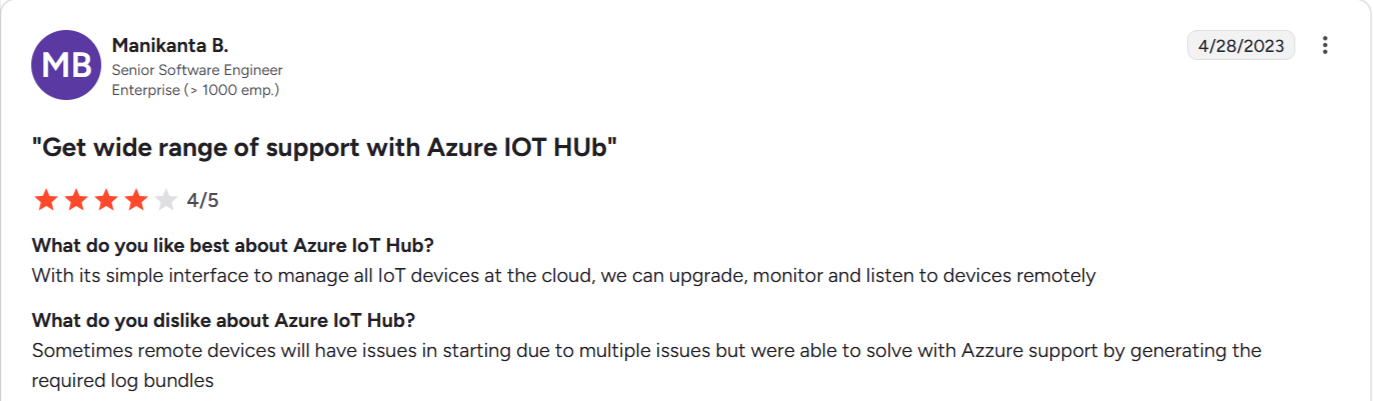
Source: G2
Who Azure IoT Hub is best for
- Azure-centric enterprises: Managing industrial IoT devices within an existing Microsoft cloud environment.
- Teams prioritizing secure device communication: Handling large fleets where identity, authentication, and messaging reliability are critical.
Siemens Insights Hub: Best for Industrial IoT Device Data Management and Operational Intelligence
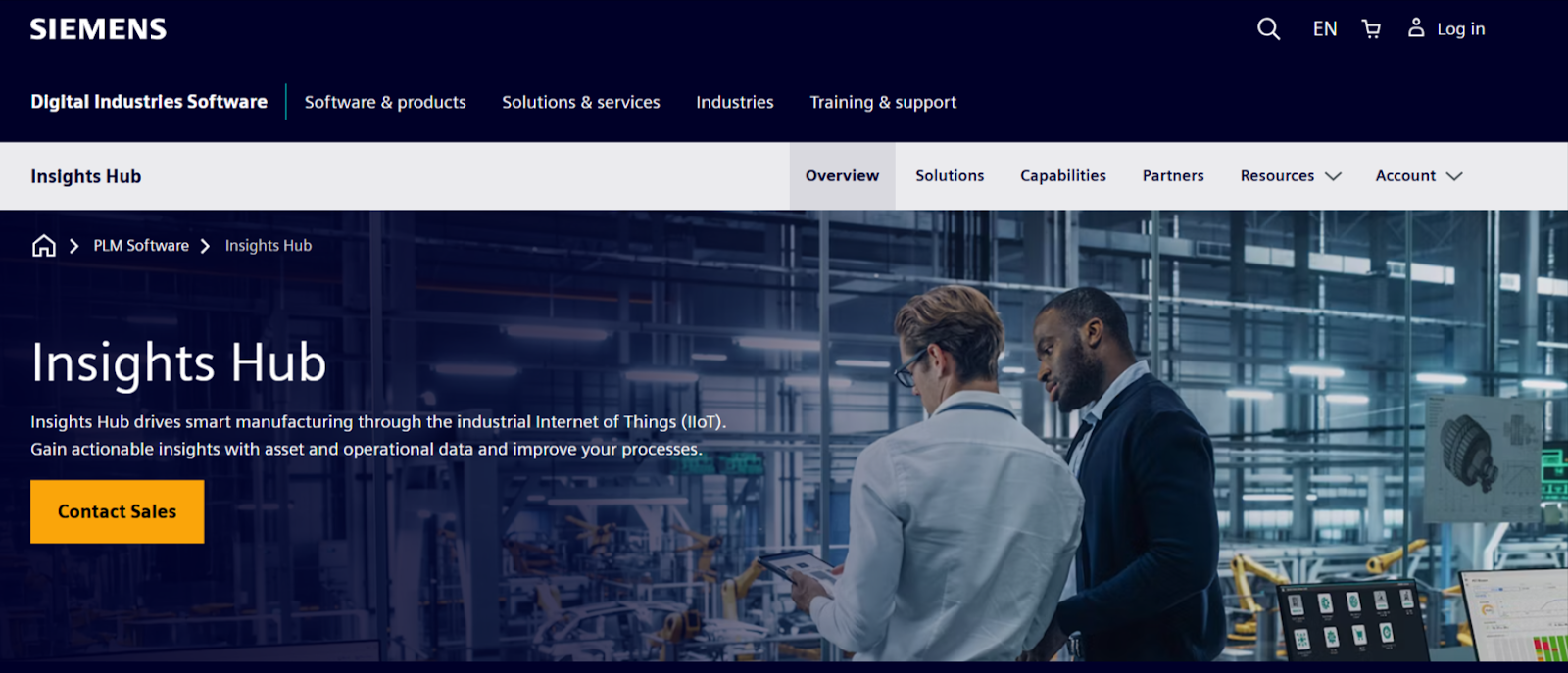
Siemens Insights Hub (formerly MindSphere) is a cloud‑native industrial IoT platform that gathers, analyzes, and visualizes operational and asset data from machines, plants, and systems.
You can use it to build data‑driven industrial applications, monitor performance across distributed operations, and apply predictive analytics to reduce downtime and optimize processes. It also integrates diverse data sources and supports low‑code application development, helping your team turn raw industrial data into actionable insights at enterprise scale.
Key Features
- Asset data integration: Connect machines, sensors, and systems to centralize IoT and operational data for analysis and visualization.
- Advanced analytics: Apply AI and predictive models to operational data to identify anomalies and forecast maintenance needs.
- Low‑code application builder: Create dashboards, workflows, and industrial IoT apps without deep development expertise.
- Digital visualization: Build customizable views and digital twins to monitor systems, simulate scenarios, and track performance.
Pricing
Where Insights Hub shines
- Industrial data and analytics: Insights Hub combines data from machines, systems, and sensors to drive performance improvements across operations.
- Predictive maintenance support: Built‑in analytics and AI detect patterns and forecast issues before they cause downtime.
- Low‑code app creation: Tools for dashboards and workflows help you tailor experiences to specific industrial scenarios.
Where Insights Hub falls short
- Cloud reliance for full power: Full analytics and scaling features often require cloud connectivity, making offline edge use harder.
- High implementation complexity: You may need specialized technical skills to configure analytics workflows and applications.
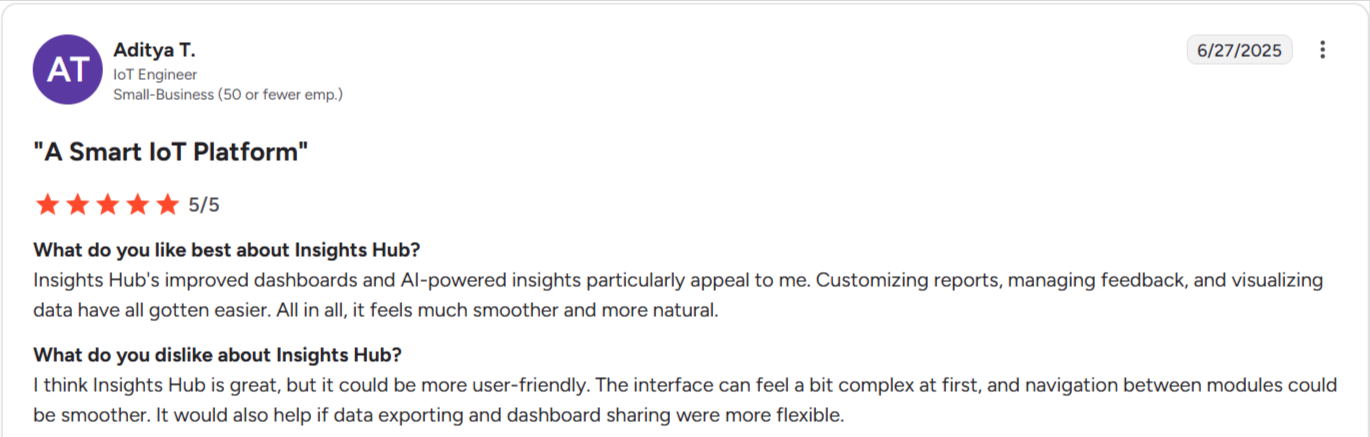
Source: G2
Pro tip: If you need lightweight edge deployment with offline support and easier setup, Portainer can manage containerized workloads directly on IoT and industrial edge devices.
Customer Reviews
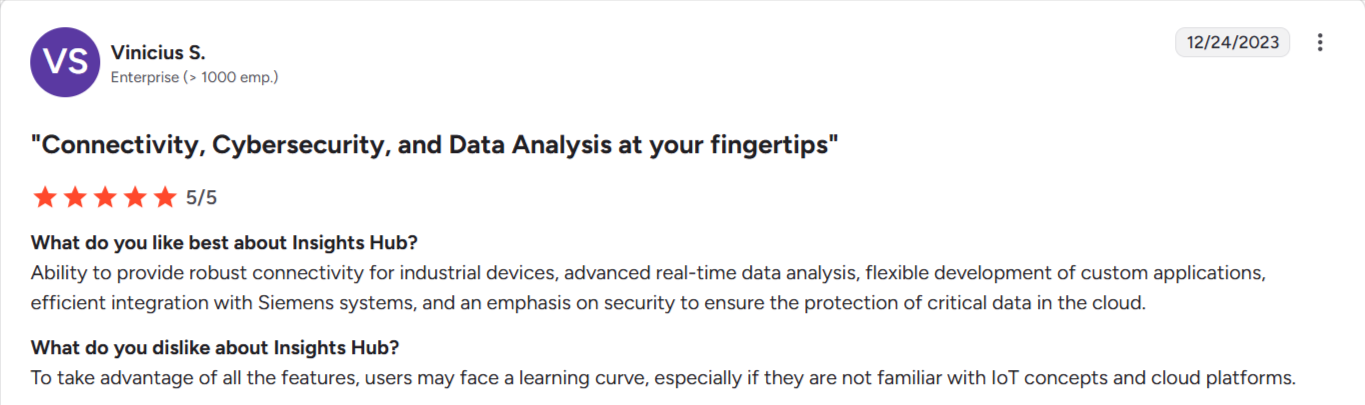
Source: G2
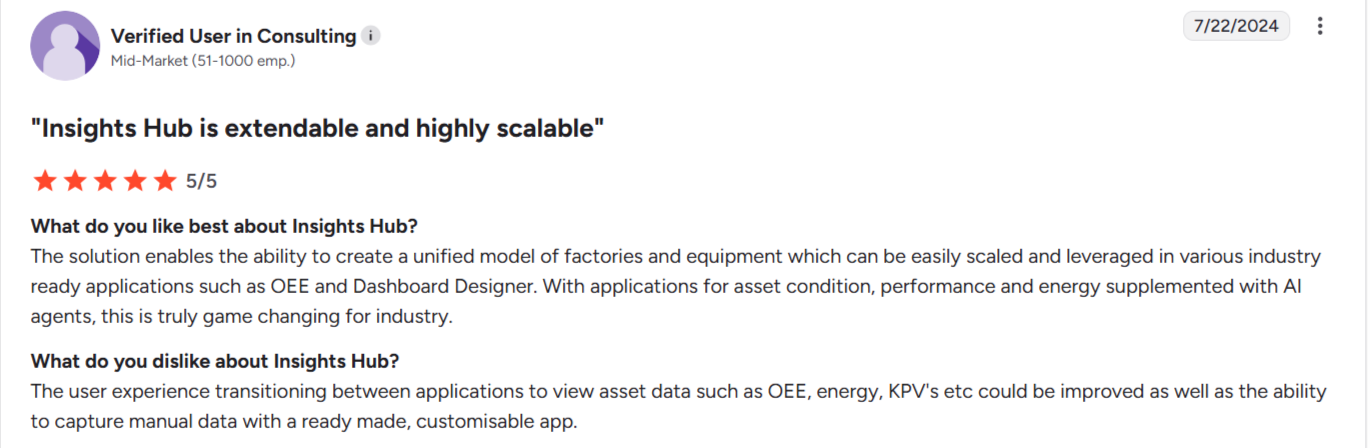
Source: G2
Who Insights Hub is best for
- Industrial analytics teams: Monitoring and analyzing device and system data to improve performance, reduce downtime, and enable predictive maintenance.
- Enterprises with distributed IoT assets: Managing large-scale industrial IoT deployments while leveraging digital twins and advanced operational insights.
Cumulocity IoT: Best for Scalable Industrial IoT Device Management and Remote Operations
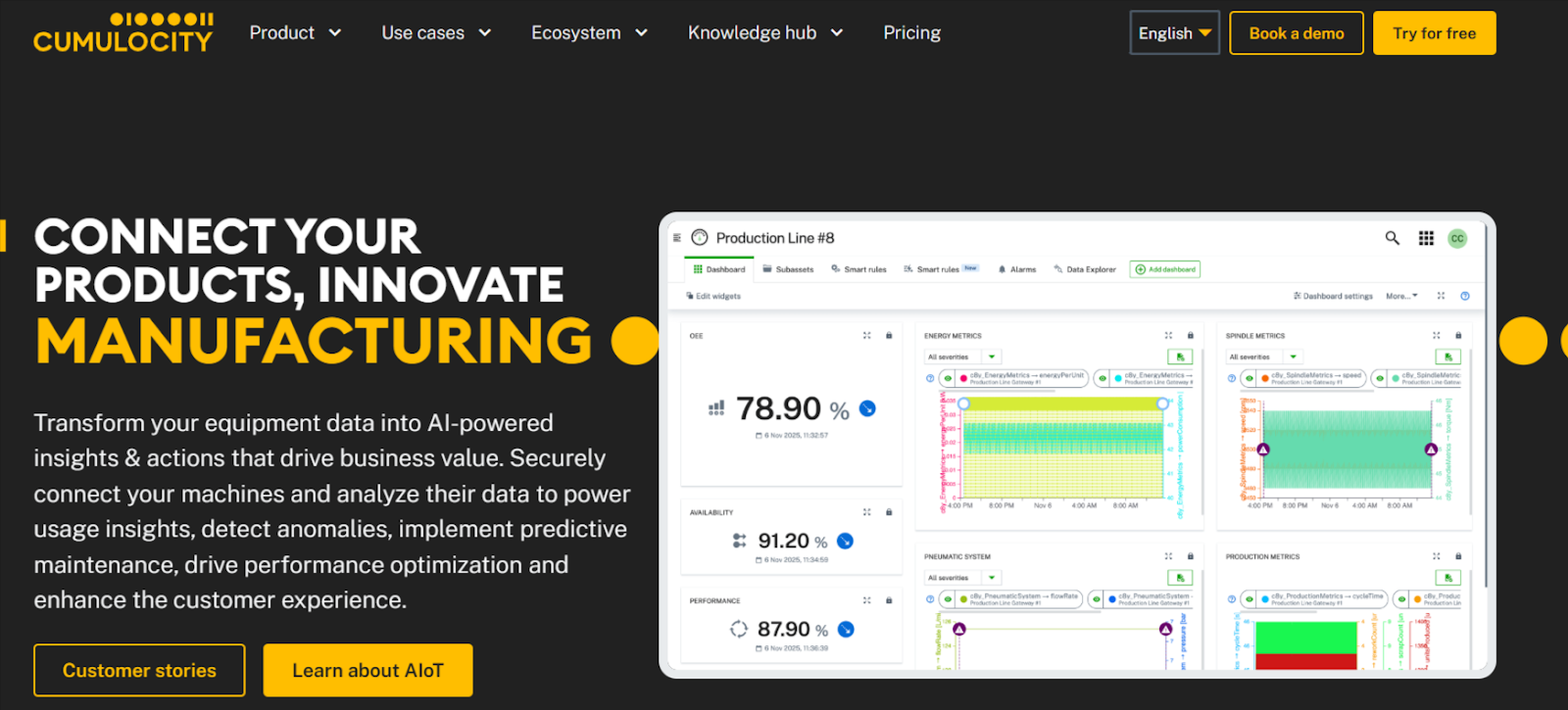
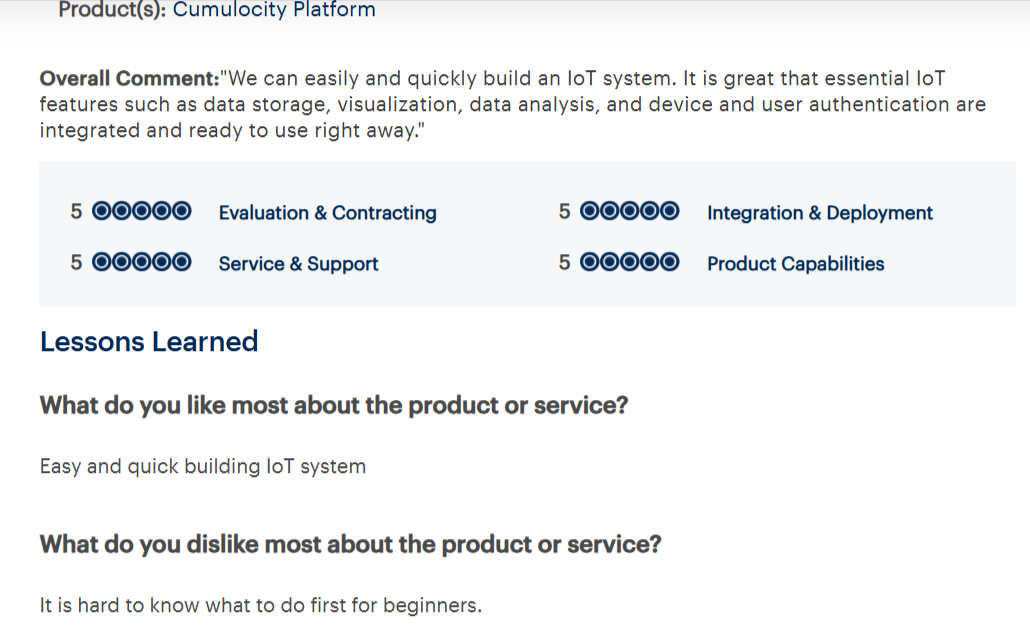
Cumulocity IoT is an enterprise-grade industrial IoT device management software that helps you connect, manage, and monitor large fleets of devices. It supports onboarding, OTA updates, configuration, real-time monitoring, and remote troubleshooting across distributed assets.
The platform also provides industrial automation, alarms, and analytics tools to streamline operational efficiency.
Key Features
- Device onboarding and lifecycle: Register, organize, and manage devices at scale with bulk provisioning and smart group automation.
- Over-the-air updates and configuration: Push firmware and configuration updates across fleets while keeping devices secure and compliant.
- Remote monitoring and diagnostics: Visualize device status, alarms, and logs to quickly identify issues and troubleshoot remotely.
- Automation and analytics: Create rules and workflows based on incoming data and alarms for operational efficiency and predictive insights.
Pricing
Where Cumulocity IoT shines
- End-to-end device lifecycle management: Handles onboarding, OTA updates, decommissioning, and remote control across industrial fleets.
- Scalable monitoring: Dashboards and alarms help you monitor performance and react to issues in real time.
- Flexible integration: Multiple protocol adapters and SDKs support diverse hardware and IoT ecosystems.
Where Cumulocity IoT Falls Short
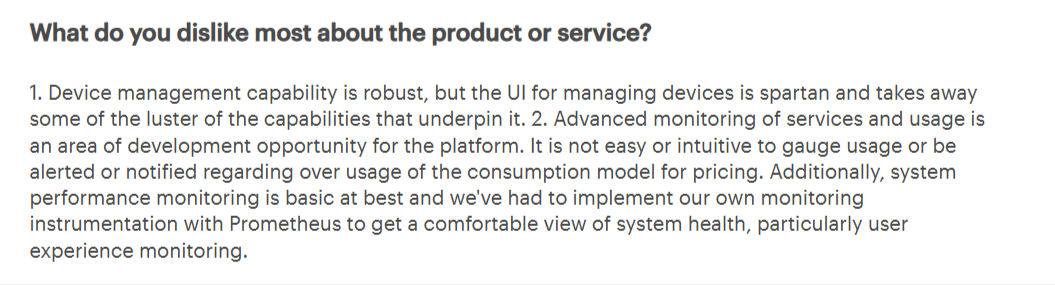
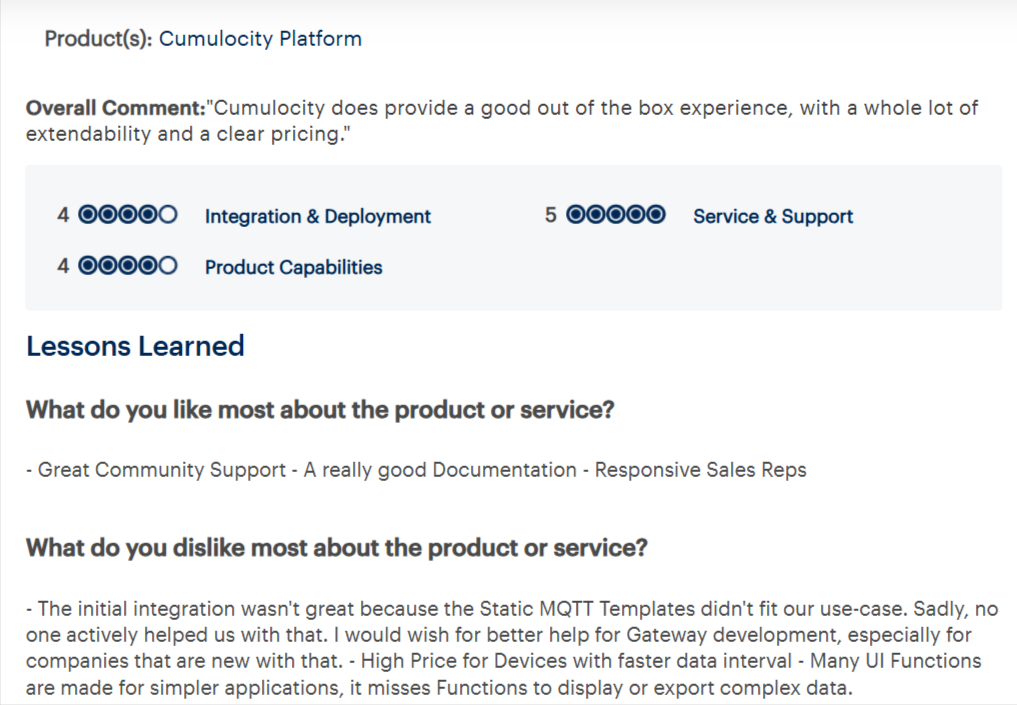
- Limited UI: Device management capabilities are powerful, but the interface feels basic and unintuitive, which can slow down day-to-day operations and reduce usability.
- Limited usage and performance visibility: Monitoring service consumption, usage thresholds, and overall system performance lacks depth. Clear alerts and insights often require additional monitoring tools to maintain operational confidence.
Source: Gartner
Customer Reviews
Source: Gartner
Source: Gartner
AWS IoT Device Management: Best for Scalable Cloud-Native IoT Device Management
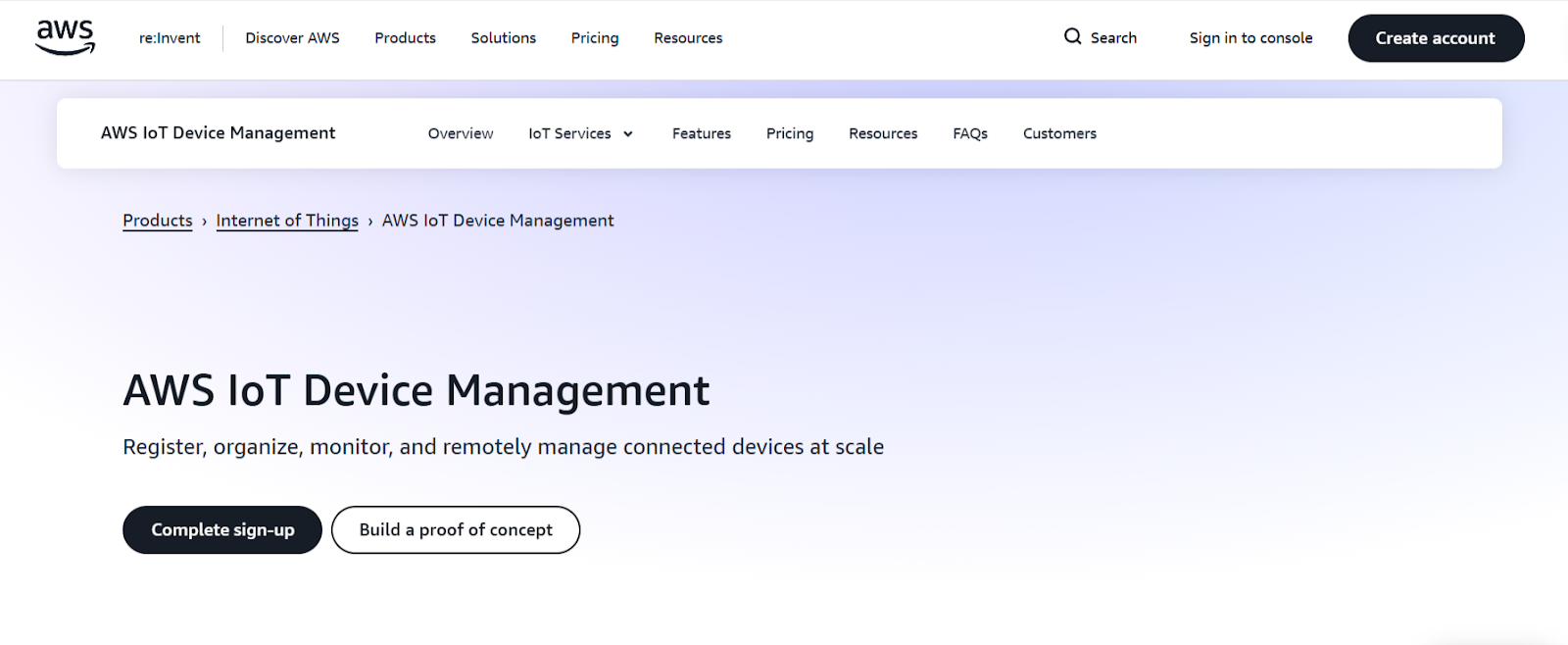
AWS IoT Device Management helps you onboard, organize, monitor, and manage connected devices at enterprise scale within the AWS cloud. It supports bulk device registration, fleet indexing and search, remote actions such as firmware updates, and secure tunneling for troubleshooting.
The platform integrates with other AWS IoT services to unify device control and lifecycle operations. It works well for distributed sensor fleets that need flexible Internet of Things management software to handle registration, grouping, firmware deployment, and remote diagnostics.
Key Features
- Bulk device registration: Add large numbers of devices quickly using templates and API workflows to streamline initial onboarding.
- Fleet indexing and search: Maintain a searchable index of your devices, states, and attributes to find and act on specific groups.
- Remote actions and updates: Schedule and execute OTA firmware and software updates at scale, including reboots and configuration changes.
- Secure tunneling and remote diagnostics: Create secure, temporary connections to troubleshoot devices behind firewalls without modifying network settings.
Pricing
AWS IoT Device Management uses a consumption-based model, billing separately for device registration, remote actions, and fleet indexing/search operations. It offers a free tier that provides 50 remote actions per month for the first 12 months.
Where AWS IoT Device Management Shines
- Mass onboarding and organization: You can register and group devices in bulk and automate fleet organization with dynamic groups.
- Deep AWS ecosystem integration: Works seamlessly with AWS IoT Core, Greengrass, and other AWS services for unified remote management and analytics.
- Scalable OTA updates: Device Jobs let you push firmware and configuration updates across thousands of devices with scheduling and failure controls.
Where AWS IoT Device Management Falls Short
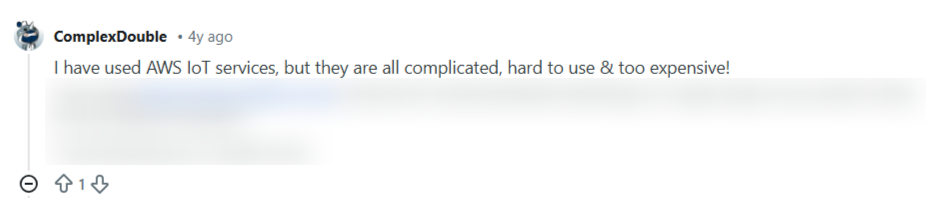
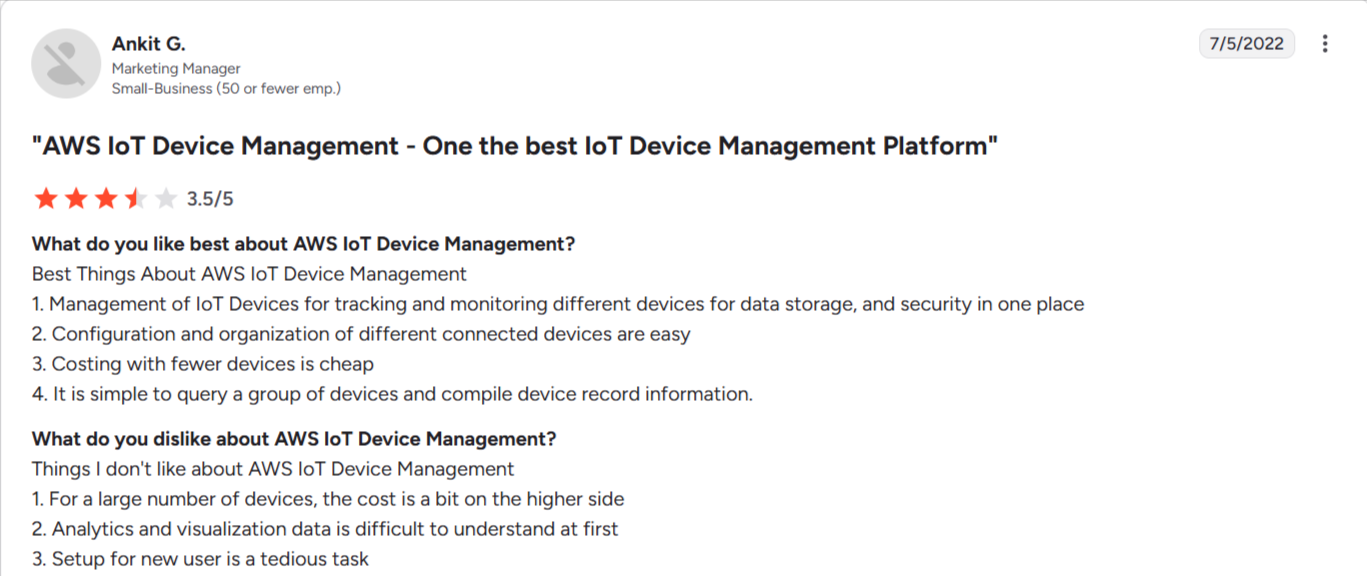
- Complex pricing structure: You pay for multiple operations (registration, indexing, remote actions), making cost forecasting difficult without careful planning.
- Vendor lock-in: The service is highly integrated into the AWS ecosystem, which can complicate multi-cloud strategies or future migrations.

Source: G2
- Heavy cloud dependency: Full feature sets and analytics rely on cloud connectivity, which may limit suitability for air-gapped or strictly offline industrial environments.
- Tedious setup for new users: Initial configuration requires deep familiarity with AWS services, IAM policies, and IoT Core, slowing onboarding for first-time teams.
Pro tip: If complex setup and cloud dependency slow you down, Portainer offers a simpler way to manage and deploy containerized workloads on edge devices without deep cloud configuration or tight vendor lock-in.
Customer Reviews
Source: Reddit
Source: G2
How to Choose the Best IoT Device Management Software
Consider these factors before choosing an IoT device management software for your team:
Scalable Management Across Distributed Environments
Industrial IoT deployments often span factories, plants, and remote sites. The platform should manage thousands of devices or edge nodes without adding operational complexity. Look for centralized visibility, grouping, and role-based access across locations.

Portainer simplifies this operation by managing containerized workloads consistently across edge, on-prem, and cloud environments from a single interface.
Book a demo for a first-hand experience on how Portainer gives you full control over industrial edge software at scale, without adding management overhead.
Ease of Setup and Day-to-Day Operations
Industrial IoT challenges like complex onboarding slows teams down and increases risk. An IoT device management platform should be easy to deploy, intuitive to operate, and quick to adopt by engineering and operations teams.
Unfortunately, many IoT device management platforms, especially in manufacturing, are difficult to set up. Some even require hiring technical experts. Portainer stands out with an easy-to-use UI and fast setup, reducing the learning curve compared to heavier IIoT platforms.
Edge and Offline Resilience
Industrial environments cannot always rely on constant cloud connectivity. The right solution should support local control and edge resilience, even during network disruptions.
Portainer manages workloads directly on edge devices, giving you control over software operations without depending entirely on cloud availability.
Security and Access Control at Scale
You need IoT device management software that lets you control who can deploy, update, or troubleshoot workloads. Otherwise, figuring out who changed a crucial edge service at odd hours will become the norm.
Portainer helps you here by providing role-based access and environment isolation. You can manage edge infrastructure securely without overengineering permissions.
Contact our sales team to see Portainer in action.
Fix IoT Device Management Challenges With Portainer
Industrial IoT environments often struggle with fragmented device control, complex edge deployments, and slow provisioning. Portainer tackles these challenges by giving you centralized, lightweight management of containerized workloads across edge, on-prem, and cloud environments. If your priority is secure, scalable software management at the edge, Portainer is the solution.
Book a demo to see how Portainer helps enterprises deliver the reliability and security industrial environments demand, with ease.