
Share this post
Many industrial operations run on machines that break without warning, consume more energy than they should, and generate data that goes unused. Industrial IoT applications address these issues by connecting your physical equipment to software systems that monitor, analyze, and act on real-time data across all sites in your operation.
This article covers real-world IIoT applications, the infrastructure needed to run them at scale, and exactly how leading industrial teams are managing them today.
How Does Industrial IoT Work?
Industrial IoT connects physical machines, sensors, and equipment to a central system that collects, analyzes, and acts on real-time data.
Picture a sensor on a factory floor detecting abnormal heat in a motor. That data travels through an edge device, gets processed locally, and triggers an alert before the motor fails. This structure, in return, helps you avoid hours of unplanned downtime.
The core components of an industrial IoT include sensors, edge devices, connectivity (cellular, Wi-Fi, or Ethernet), and software like Portainer that manages the workloads running on those devices.
Talk to Portainer’s technical team to see what it looks like to run your fleet without the usual operational weight.
Operational Benefits of Industrial IoT Systems
IIoT provides measurable benefits across five areas that directly impact your operating costs and output:
Fewer Unplanned Equipment Failures
Unplanned downtime is one of the most expensive problems in any industrial operation. Siemens data shows that the cost of one hour of unplanned plant downtime across the world’s 500 biggest companies is almost $1.4 trillion annually. That’s equivalent to 11% of their revenues.
IIoT changes this by putting sensors on crucial machines to monitor temperature, vibration, and pressure in real time. When readings drift outside normal ranges, your team gets an alert before a breakdown happens, not after.
Such foresight, as highlighted in a MoldStud research report, reduces maintenance costs by up to 25% and unplanned downtime by 30%.
Remote Management Across Multiple Sites
Managing dispersed industrial assets without IIoT means sending technicians on-site for every inspection, configuration change, or software update. That costs time and travel budget, particularly for utilities, renewables, and multi-plant manufacturers.
Interestingly, many utilities, renewable energy operators, and infrastructure providers now maximize industrial IoT. This new wave has reduced their site visits by diagnosing and resolving problems remotely.
This factor is also where containerized edge software management becomes very crucial. A tool like Portainer allows operations teams to push software updates, roll out new workloads, and manage containerized applications running on dozens or hundreds of remote edge devices, all from a single interface.
Faster Quality Control on the Production Line
Traditional quality checks happen at the end of a production run. By that point, defective products have already consumed materials, labor, and machine time.
IIoT-enabled quality control uses machine vision, force sensors, and inline inspection systems to detect defects in real time. Streamlining AI apps deployment on edge devices allows these inspection models to run locally and trigger automatic adjustments before defective parts progress further down the line.
Top 6 Industrial IoT Applications Across Industries in 2026
Here are the applications delivering the most measurable impact right now:
1. Predictive Maintenance in Manufacturing
This application is the most widely adopted IIoT application, and for good reason.
Traditional maintenance runs on fixed schedules, so machines get serviced whether they need it or not, and failures still happen between service windows.
IoT-powered predictive maintenance uses smart sensors to continuously monitor necessary parameters such as temperature, vibration, pressure, and lubrication levels, detecting potential failures before they cause downtime.
For example, Siemens’ Insights Hub platform uses machine learning to analyze performance data from factory-floor equipment, helping manufacturers improve Overall Equipment Effectiveness (OEE) and reduce maintenance costs.
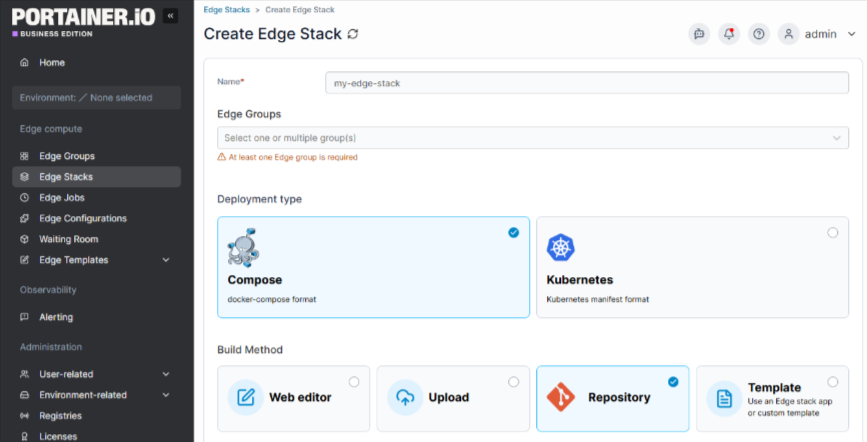
Managing the software workloads behind these systems across tens of factory sites is a serious operational challenge. Portainer’s Edge Stacks allows your operations teams to deploy and update the applications running on edge devices across every facility from a single dashboard, without sending engineers on-site.
2. Smart Grid & Energy Management
Energy companies use IIoT sensors across grid infrastructure to ensure energy nodes operate at optimal capacity and trigger replacements when needed. This setup is particularly important for renewable energy operators managing wind and solar installations where environmental conditions constantly shift.
Duke Energy in Florida runs a self-healing grid using IIoT. The system detects faults, isolates damaged sections, and reroutes power automatically, improving grid reliability and reducing downtime without human intervention.
3. Oil & Gas Pipeline Monitoring
The oil and gas industry relies on IIoT for pipeline monitoring, predictive maintenance, and remote operations, making it easier to manage assets spread across vast geographic areas.
Chevron uses IoT sensors to continuously track pipeline conditions, including pH levels and corrosion rates, allowing operators to act before damage occurs and cutting both repair costs and unplanned downtime.
In February 2024, Industrial IoT provider TWTG also signed a memorandum of understanding with Aramco, targeting IoT deployment for asset management, pipeline monitoring, and well optimization across Saudi Arabia’s industrial sector.
Side note: If you manage edge devices across remote pipeline sites, Portainer’s Update & Rollback feature lets software running on those devices be updated or rolled back remotely, with no site visits required.
4. Cold Chain & Logistics Management
DHL uses IIoT-enabled tracking devices to monitor the location and condition of shipments in transit, using real-time temperature and humidity data to ensure perishable goods arrive within spec.
Maersk applies IIoT across its shipping operations to optimize vessel routes, reduce fuel consumption, and improve delivery reliability.
The cold chain is particularly unforgiving. A single temperature excursion can destroy an entire pharmaceutical shipment. That’s why top logistics companies like DHL now run IoT-driven smart logistics systems to monitor the conditions of shipments, such as temperature, for perishable goods.
5. Precision Agriculture
John Deere’s self-driving tractors and agricultural machinery are equipped with IIoT sensors, GPS, and advanced automation systems that enable autonomous operation across large farming operations.
Beyond autonomous equipment, IIoT sensors monitor soil moisture, crop health, and weather conditions in real time, allowing farmers to apply water and fertilizer precisely where and when it is needed rather than on fixed schedules. This reduces input costs while improving yield.
6. Renewable Energy Asset Management
Wind turbines and solar installations are often located in remote or offshore locations where sending a maintenance crew is expensive and slow.
IIoT enables remote monitoring of each turbine or panel, detecting performance degradation before it causes an outage.
Evergen, an AI-driven platform, uses IIoT data and weather forecasting to predict energy demand, ensuring solar power is stored in advance for cloudy days.
For operators managing containerized software across hundreds of distributed renewable energy edge devices, Portainer’s Edge Groups let teams organize devices by site, region, or asset type, then push updates to specific groups without manually updating every device.
Infrastructure Behind Industrial IoT Applications
Sensors and connectivity are only half the story. The other half is the software infrastructure that processes data, runs analytics, and keeps everything working at scale.
Every IIoT deployment rests on three layers:
- Edge computing processes data locally on the device rather than sending everything to a central cloud. This reduces latency, cuts bandwidth costs, and keeps critical systems running even when connectivity drops.
- Containerized applications package each software workload with all its dependencies, into a portable, isolated unit.
- Device management platforms give operations teams centralized control over what software runs on which devices, when updates roll out, and what happens if a deployment goes wrong.
For a deep dive into the operational mechanics behind this layer, read our technical guide on managing fleet devices seamlessly across hybrid environments.
{{article-cta}}
Managing IIoT Edge Devices at Scale with Portainer
Docker is the standard containerization platform for IIoT edge devices because containers launch in milliseconds and run on hardware where VMs simply cannot. As your fleet grows from a handful of devices to hundreds, managing those Docker workloads manually becomes unsustainable.
Portainer solves this directly through these features:
- Edge Groups organize devices by site or workload type
- Edge Stacks deploy and update containerized workloads in staged rollouts
- Update & Rollback recovers failed deployments remotely, without on-site visits.
Book a demo to see how Portainer provides order, clarity and control to your edge operations.
Managing Industrial IoT Applications at Scale
Here’s how to effectively manage IIoT applications at scale:
Build a Complete Device Inventory
Before managing anything at scale, know exactly what is running on your network.
Every organization should know what IoT and OT devices are connected, where they connect, and what privileges they possess. Without this, updates go to the wrong devices, vulnerabilities go undetected, and troubleshooting becomes guesswork.
A solid inventory captures:
- Device type, location, and function
- Operating system and firmware version
- Software workloads currently running on each device
- Network connectivity method (cellular, Ethernet, Wi-Fi)
- Last known update status
Standardize on Containerized Workloads
Running bare-metal applications across a distributed IIoT fleet creates a version control nightmare. One device runs a slightly different dependency than another, and debugging becomes a time sink.
Containerizing every workload with Docker solves this. Each application runs in an isolated environment with its dependencies packaged inside, so the same image behaves identically on every device in your fleet.
Implement a Controlled Update Rollout Process
Pushing software updates to a live industrial fleet without a staged process is one of the fastest ways to cause unplanned downtime. A controlled rollout process looks like this:
- Test the update on a small subset of non-critical devices first
- Monitor for 24 to 48 hours before widening the rollout
- Deploy to larger device groups progressively
- Roll back immediately if anomalies appear, before the issue spreads
Portainer’s Edge Stacks handle this natively. The update rollout functionality deploys to specific Edge Groups in stages rather than pushing to the entire fleet at once.
Track ROI and Plan for Remote Recovery
31% of IIoT professionals cite uncertain ROI as a major barrier to scaling deployments. Define measurable KPIs before deployment, not after.
On the recovery side, Portainer’s Update & Rollback allows you to remotely update the Edge Agent on any device and roll back instantly if anything breaks. Combined with Edge Groups and staged Edge Stack deployments, your operations team can manage the full lifecycle of every device in the fleet from a single interface.
Real-World Industrial IoT Examples
Here’s how real industrial operations have used IIoT and containerized edge management to solve problems that were costing them millions.
U.S. Building Materials Manufacturer Turns Cameras into Smart IIoT Devices
A major U.S. building materials company operating 60+ plants had one Docker expert handling up to 40 manual deployments per day.
Their data scientists couldn’t push updates without him, creating a costly bottleneck.
After adopting Portainer, the team deployed containerized workloads to every edge camera across multiple plants simultaneously with a single click.
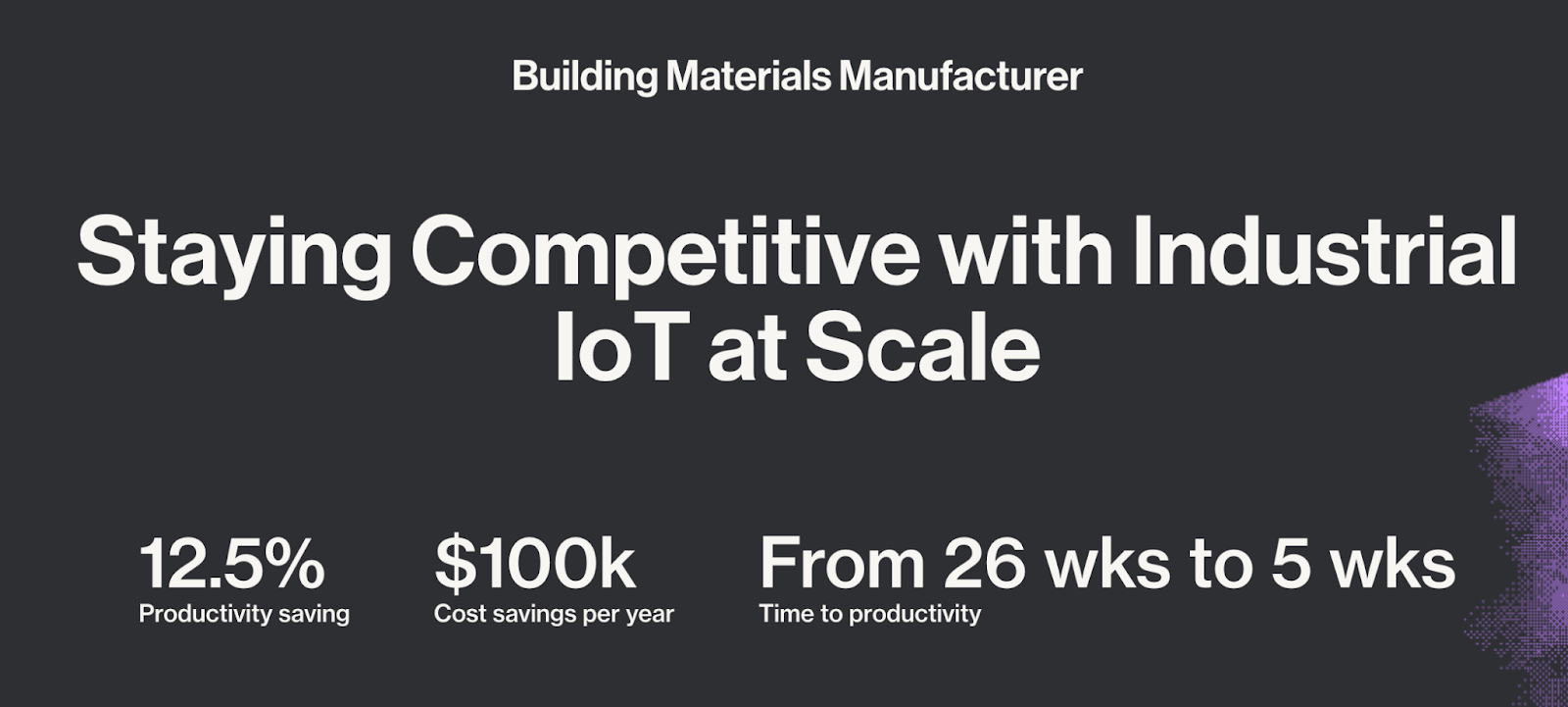
In return the company saved $100,000 annually, achieved a 12.5% productivity gain, and time-to-productivity cut from 26 weeks to five.
Read the full U.S. building material manufacturer.
EV Battery Swapping Company Manages Thousands of Edge Devices Across Factories and Vehicles
This U.S. EV technology company needed to push frequent software updates to thousands of edge devices across factories, vehicles, and partner sites worldwide.
Manual CLI-based deployments created bottlenecks and version control problems at scale. Portainer replaced that fragmented process with a unified control plane, enabling both engineering and operations teams to self-service deploy, perform remote diagnostics, and implement granular access controls.
The company now scales internationally without adding operational headcount.
Cummins Powers 100,000+ Software-Defined Vehicles with Containerized Edge Management
Cummins had 35 near-identical software versions, each tied to a different vendor’s hardware, with no way to remotely update containers once devices were deployed in vehicles.
Working with Portainer, they built a server-and-agent architecture delivering secure, fail-safe updates across constrained vehicle networks. One standard architecture replaced all 35 versions, delivered on time, and the approach is now adopted as an industry reference model across the automotive sector.
Book a demo → See how Portainer gives enterprise teams full control over industrial edge software at scale, without adding management overhead
Key Challenges of Implementing Industrial IoT Systems
Industrial IoT Implementation Checklist
Use this checklist to avoid the common failures seen in most industrial IoT deployments:
- Define a standard edge device baseline (OS, Docker runtime, networking)
- Containerize all workloads for consistent deployments
- Group devices logically (by site, function, or risk level)
- Use controlled rollout and rollback for updates
- Set up real-time monitoring and alerting
- Secure access with role-based controls and secrets management
- Plan for offline operation and unreliable connectivity
Manage Industrial IoT Applications More Efficiently with Portainer
Connecting machines and sensors is only the starting point. The real operational challenge is managing the software running across your entire fleet of edge devices, reliably, remotely, and at scale.
Portainer gives you a single interface to deploy containerized workloads, push staged updates, roll back failed deployments, and maintain full visibility across every edge device, without a single on-site visit.
For teams running Docker across distributed IIoT environments, or exploring lightweight Kubernetes at the edge with KubeSolo, Portainer removes the infrastructure complexity that keeps most deployments from scaling beyond the pilot stage.
Contact Portainer’s technical team to see how to gain full control of your edge fleet without adding operational overhead today.