Aveiro Tech City Living Lab
Automating Edge‑based Vehicular Services for Europe’s Smartest Living Lab

Business overview
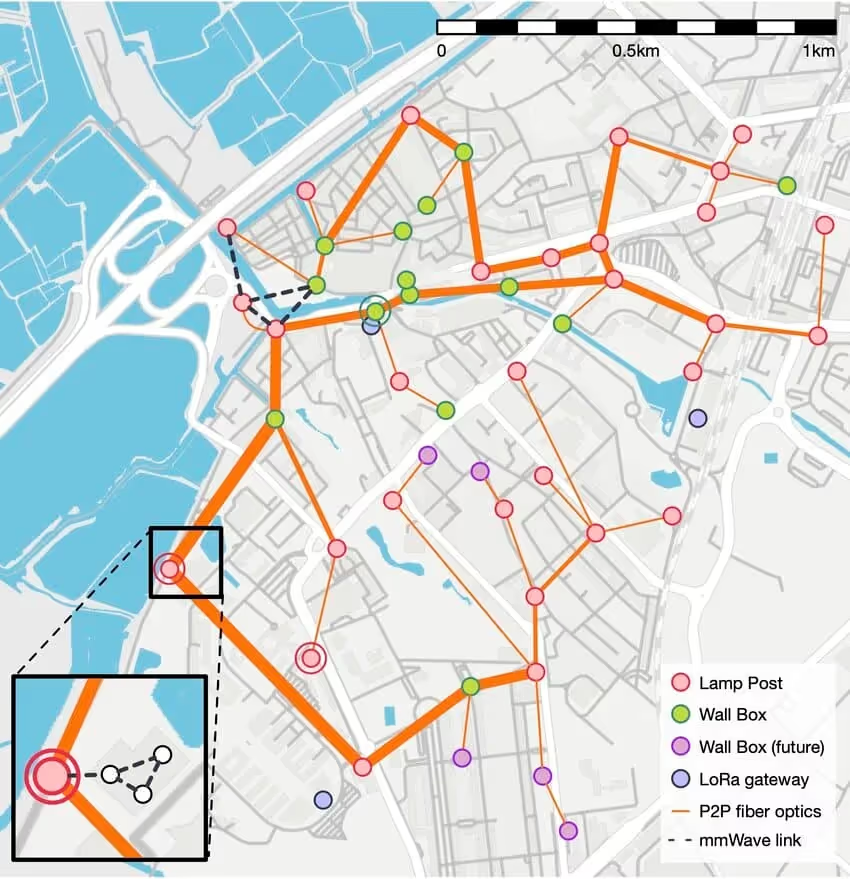
The Aveiro Tech City Living Lab (ATCLL) is a pioneering smart‑city innovation hub based in Aveiro, Portugal. It serves as an open testbed where public institutions, researchers, startups, and industry collaborators can experiment and deploy real‑world digital services. ATCLL’s urban edge network includes wall‑box units and smart lamp‑posts equipped with cameras, radars, V2X radios, and computing capacity, supporting advanced applications in public safety, traffic optimization, object detection, and vehicle-to-everything communications.
Challenge
As ATCLL scaled up its edge‑based infrastructure and onboarded external partners, several issues emerged:
- Distributed edge footprint – Hundreds of diverse nodes installed across city infrastructure (e.g., lamp posts, wall boxes)
- Complex service deployment – Docker‑based services for camera/object detection and vehicular communications required frequent updates
- Partner access control – Multiple external teams needed role‑based access to specific edge nodes and services
- Manual deployment overhead – Each new node demanded manual configuration, risking delays and misconfiguration
- Security & consistency – Ensuring secure, uniform deployments throughout a shared, distributed network was critical
Solution
ATCLL implemented Portainer to solve these challenges through:
- Standardized deployment – Templates for camera detection and vehicular services ensured consistent roll-outs
- RBAC-based access – Portainer’s role-based controls enabled fine-grained, partner-specific access to services and nodes
- GitOps automation – Edge deployments auto synced from shared Git repos, with no manual setup required for new nodes
- Centralized orchestration – A unified UI empowered platform teams to manage all edge nodes securely and at scale
This approach eliminated manual intervention, reduced risk, and provided a scalable, secure mechanism to govern and update urban services automatically.
Results
This approach eliminated manual intervention, reduced risk, and provided a scalable, secure mechanism to govern and update urban services automatically.